
Key Takeaways
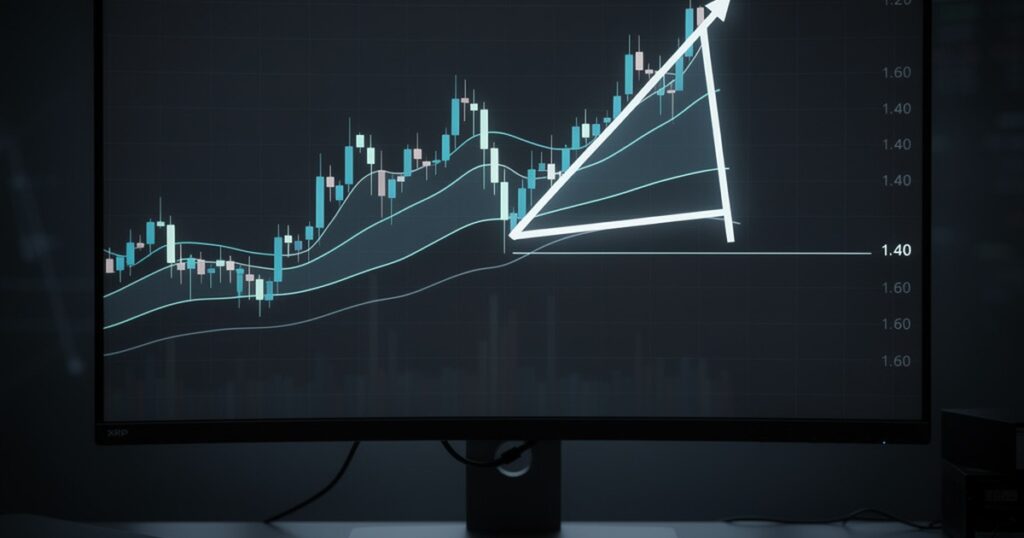
- ▼ DOGE is testing the $0.105-$0.106 resistance band after a fast rebound, where a bearish harmonic completion zone can attract supply.
- ▲ Short-term momentum has improved: Bybit spot data shows DOGE above its 4-hour 20, 50 and 100 EMAs, with daily RSI near 71.
- ■ The larger trend remains mixed because the weekly close is still below the 20-week and 50-week EMAs, keeping $0.112 and $0.147 as major upside checkpoints.
Dogecoin is back at a technically important area. DOGE traded near $0.1049 on April 29, 2026, according to CoinGecko, giving the asset a market capitalization of about $16.1 billion and a top-10 crypto ranking. The rebound has been strong enough to change the short-term chart, but not strong enough to erase the broader bearish structure that has dominated since the late-2025 decline.
This analysis uses that TradingView metadata only as a directional prompt. The levels below are derived independently from CoinGecko market data and Bybit DOGEUSDT spot candles, with the focus on harmonic structure, support and resistance, exponential moving averages and volume behavior.
Why Dogecoin Price Is at a Decision Point
The immediate tension is simple: DOGE has recovered from the $0.087-$0.090 support shelf, but the rebound is now pressing into the same zone where sellers have repeatedly appeared. On Bybit spot DOGEUSDT, the latest daily candle reached $0.10544 after opening near $0.09933. That high nearly matches the upper edge of the recent 4-hour resistance cluster around $0.105-$0.106.
The move is not weak. CoinGecko shows DOGE up about 5.5% over 24 hours, 7.6% over seven days and 13.4% over 30 days. For momentum accounts, that is enough to force attention back onto the meme-coin complex. For risk managers, however, the rally is still occurring after a much larger drawdown: DOGE remains roughly 85.7% below its 2021 all-time high of $0.7316 and about 41.5% lower over one year.
That split between short-term strength and higher-timeframe damage is what makes the current setup vulnerable to a bearish harmonic interpretation. Harmonic patterns are not magic reversal signals; they are structured ways of identifying when a rebound has reached a proportionally stretched zone. In this case, the market has bounced hard enough from a low base to test supply, but the weekly trend has not yet confirmed a durable upside reversal.
What Does the Bearish Harmonic Zone Suggest?
A bearish harmonic setup generally matters when price rallies into a completion area after a prior impulse down, especially if that area overlaps with horizontal resistance and weakening volume. DOGE’s current structure fits that description more than a clean breakout profile. The March-April recovery carried price from the $0.087-$0.089 demand area toward $0.105, a region that also capped several daily and 4-hour advances.
The first resistance is $0.105-$0.106. A daily close above that zone would reduce immediate bearish pressure, but it would not fully invalidate the pattern because the next overhead checkpoints sit close together. The $0.112-$0.118 area includes prior weekly reaction levels and the falling 20-week EMA zone. Above that, $0.131-$0.138 marks the January breakdown shelf, while $0.147 aligns near the 50-week EMA. In other words, DOGE has several layers of supply before the chart can be called broadly constructive.
The bearish harmonic read is strongest if DOGE rejects between $0.105 and $0.112, then loses the $0.100 psychological level. That would imply the rebound was a corrective leg rather than the start of a fresh impulse. A move below $0.096 would add confirmation by breaking the short-term EMA stack, while a return to $0.089 would retest the demand zone that has kept DOGE from extending toward the February low near $0.080.
EMA Analysis: Short-Term Repair, Weekly Resistance
The moving-average picture is divided by timeframe. On the 4-hour chart, DOGE is above its 20 EMA near $0.1001, 50 EMA near $0.0985 and 100 EMA near $0.0970 based on recent Bybit candles. That confirms a short-term improvement: buyers have regained the intraday trend and are defending higher lows above $0.096.
The daily chart is more nuanced. DOGE is above its estimated 20-day EMA near $0.0971 and 50-day EMA near $0.0966, which supports the rebound case. However, the estimated 100-day EMA remains higher, near $0.1037, meaning price is only just clearing a medium-term trend filter. Daily RSI near 70.7 shows the rebound is extended rather than early. A high RSI is not automatically bearish, but near resistance it often means the next candle sequence must either accelerate or consolidate quickly.
The weekly chart is where the bearish case still has weight. DOGE remains below the 20-week EMA near $0.1117 and the 50-week EMA near $0.1472. The 100-week EMA, around $0.1648, is even farther overhead. Until DOGE can close back above the 20-week EMA and hold it as support, weekly trend followers are likely to view rallies as corrective bounces inside a larger downtrend.
This is why the $0.105-$0.112 band is so important. It is not only a horizontal resistance zone; it is also the bridge between a short-term recovery and a higher-timeframe trend test. A rejection here would keep the harmonic pattern active. A strong close above $0.112, followed by consolidation above that level, would weaken the bearish pattern and shift focus toward $0.118 and $0.131.
Support and Resistance Levels to Watch
The nearest support is $0.100, a round level that now separates momentum continuation from a failed breakout attempt. If DOGE holds $0.100 while volume remains steady, bulls can keep pressure on the $0.105-$0.106 resistance band. A shallow pullback into $0.100-$0.098 would be normal after a strong daily candle.
The next support is $0.096-$0.097. This zone matters because it contains the 4-hour 100 EMA and recent consolidation lows. Losing it would show that buyers are no longer defending the short-term trend. Below that, $0.092-$0.093 is the next reaction shelf. The deeper support range is $0.087-$0.089, where DOGE has repeatedly found demand in recent weeks.
Resistance begins at $0.105-$0.106, then $0.112-$0.118. The latter band is more important for swing positioning because it includes the weekly EMA barrier and the upper side of the recent recovery channel. If DOGE reaches $0.118 but cannot expand volume, the bearish harmonic scenario would still argue for caution. A decisive move above $0.131 would be the first stronger sign that sellers are losing control of the broader structure.
The long-term chart adds context. DOGE traded as high as $0.484 in late 2024, then spent much of 2025 and early 2026 building lower highs. The weekly candle history shows a major support flush to $0.080 before the current recovery. That makes $0.080 the critical invalidation line for the bull defense. If DOGE loses $0.087-$0.089 and then breaks $0.080, the chart would open a deeper downside range where historical liquidity is thinner.
Volume Patterns Do Not Yet Confirm a Clean Breakout
Volume is the main reason this rebound deserves respect but not blind acceptance. The latest daily Bybit spot candle shows about 136.3 million DOGE in volume, below the recent 20-day average near 188.0 million and the 60-day average near 180.8 million. That means price is testing resistance on improving momentum but not on unusually strong spot participation.
On the 4-hour chart, the breakout attempt included a sharp volume burst during the move from roughly $0.101 to $0.105, but the newest partial candle was much quieter. That is normal during an incomplete candle, yet it also means follow-through has to be monitored closely. If the next sessions print higher highs with declining volume, the harmonic rejection thesis becomes more credible.
The weekly volume picture is even more cautious. The current week is not complete, but volume so far is far below the 20-week average. More importantly, the biggest weekly volumes in the available Bybit series appeared during prior high-volatility declines and blow-off rallies, not during the current recovery. Sustainable trend reversals usually need either persistent accumulation or a clear liquidation event followed by expanding demand. DOGE has shown stabilization, but not yet a decisive accumulation signature.
Bullish and Bearish Scenarios for DOGE
The bearish scenario is straightforward. DOGE stalls between $0.105 and $0.112, daily RSI cools from an elevated reading and price slips back below $0.100. If $0.096 then fails, the market would likely revisit $0.092 and $0.089. A clean break of $0.087 would expose the February low near $0.080. Under this path, the harmonic zone acts as the rally cap, and the recent rebound becomes a distribution opportunity for larger sellers.
The bullish scenario requires more confirmation. DOGE must close above $0.106, defend that area on a retest and then challenge $0.112 with rising volume. A weekly close above $0.112 would be the first sign that the 20-week EMA is no longer controlling the market. From there, $0.118, $0.131 and $0.147 become the upside checkpoints. The strongest version of the bullish case would be a move above $0.147, because that would put DOGE back above the 50-week EMA and force bearish swing positions to reassess.
The neutral scenario may be the most realistic in the short run. DOGE could spend several sessions between $0.096 and $0.106 while the market decides whether the rebound has enough participation to continue. In that case, traders would watch range behavior: higher lows above $0.098 would favor continuation, while repeated failures at $0.105 would favor mean reversion.
Conclusion: DOGE Needs More Than One Strong Candle
Dogecoin’s rebound has improved the short-term chart, but the larger technical picture is not yet bullish. The 4-hour EMA stack supports upside momentum, and the daily move into $0.105 shows that buyers are active. Still, weekly EMAs remain overhead, volume is not yet confirming a high-conviction breakout and the $0.105-$0.112 region overlaps with a credible bearish harmonic resistance zone.
For now, DOGE is best viewed as a market at resistance rather than a confirmed trend reversal. A close above $0.112 with stronger volume would challenge the bearish read. Failure below $0.100, followed by a break of $0.096, would keep the downside path toward $0.092-$0.089 in play. The next few candles matter because they will show whether this rally is accumulation or simply another corrective bounce inside a broader downtrend.
Related market reads: Three Bitcoin Charts Signal BTC Price Rebound to $82K and Bitcoin Slides as $100 Oil Raises Asia Stress.
FAQ
What is the key Dogecoin resistance level now?
The first key resistance is $0.105-$0.106. A stronger confirmation level is $0.112, where the weekly 20 EMA area begins to matter.
What support level matters most for DOGE?
The $0.096-$0.097 zone matters most in the short term because it aligns with recent consolidation and 4-hour EMA support. Below that, $0.087-$0.089 is the deeper demand zone.
Does the bearish harmonic pattern guarantee a decline?
No. It identifies a high-risk resistance zone, not a guaranteed outcome. The pattern weakens if DOGE closes above $0.112 and holds that level with stronger volume.
Why is weekly EMA resistance important?
Weekly EMAs filter larger trend direction. DOGE remains below its 20-week and 50-week EMAs, so higher-timeframe trend followers may still treat rallies as corrective until those levels are reclaimed.
Where is Dogecoin listed for market tracking?
DOGE is widely tracked across major crypto data platforms and exchanges. This analysis references CoinGecko market data and Bybit DOGEUSDT spot candles for price, volume and technical levels.
Affiliate Disclosure: This page contains affiliate links. Coinbix may earn a commission at no extra cost to you.
Disclaimer: This article is for informational purposes only and does not constitute financial advice. Cryptocurrency investments carry significant risk. Always conduct your own research before making investment decisions.