
Key Takeaways
- ▲ Terra (LUNA) is the native token of the new Terra 2.0 blockchain, built after a community-led transition from Terra Classic.
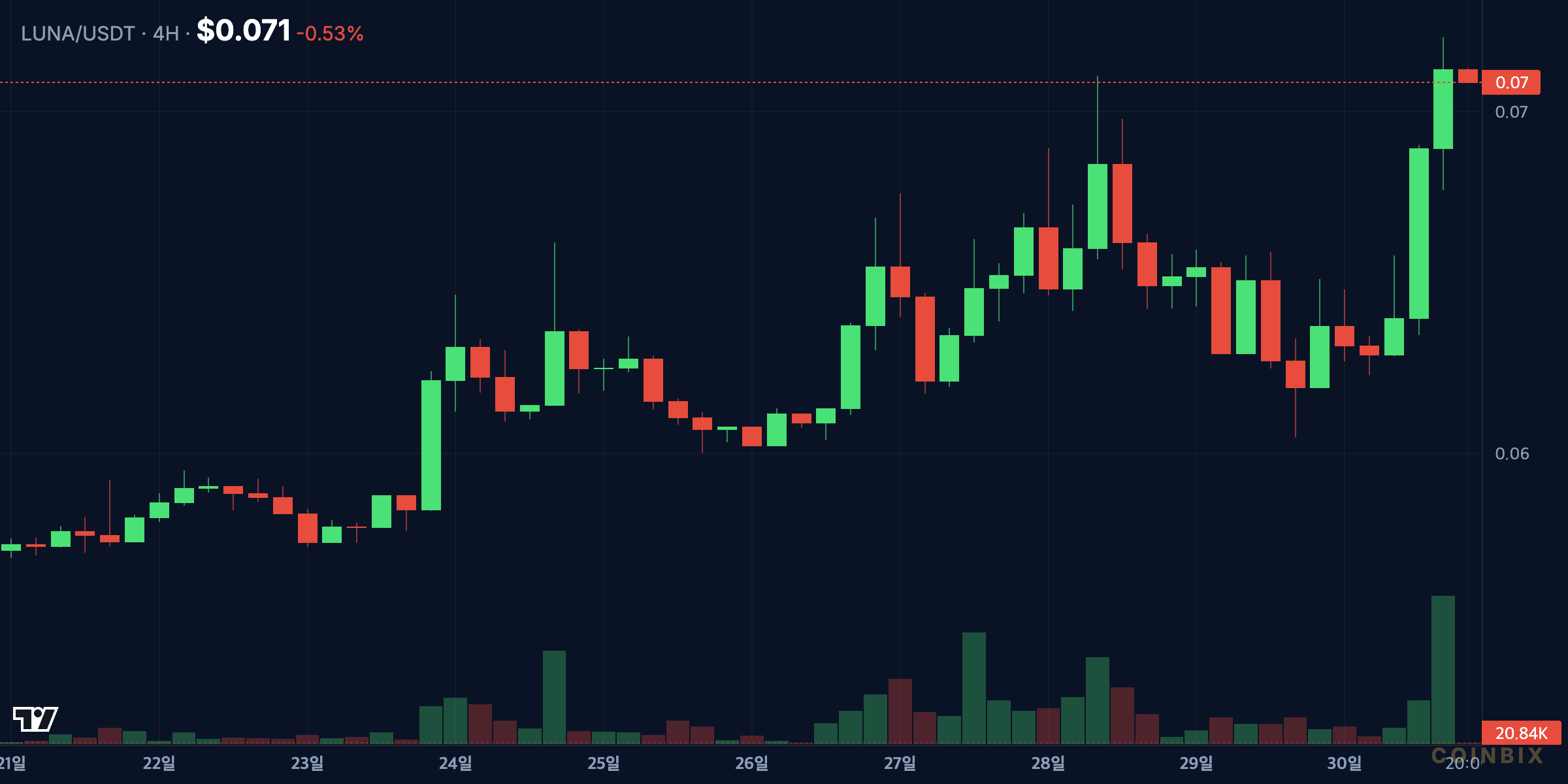
- ▲ market data platform data shows LUNA trading at $0.0709, with gains of 14.16% over 24 hours, 22.13% over 7 days, and 28.01% over 30 days.
- ■ The project now focuses on decentralized applications and financial tools without the original stablecoin-centered model.
What is Terra (LUNA)?
Terra (LUNA) is the native token of the Terra blockchain, a decentralized platform designed to host applications and provide financial tools. This review focuses on the new Terra 2.0 token, LUNA, not Terra Classic or LUNC.
The distinction matters. Terra 2.0 was created after the transition from Terra Classic through a community-led governance proposal. The new chain shifted the network’s direction toward a decentralized economy without a stablecoin at the center of the model. That makes today’s Terra a different project from the earlier ecosystem that became widely associated with algorithmic stablecoin risk.
According to market data platform, Terra has the market data platform ID terra-luna-2 and trades under the symbol LUNA. Its current price is $0.0709, with a market capitalization of $50,370,522 and 24-hour trading volume of $35,182,093. Those figures place LUNA at rank #480 on the market data platform, giving the token a smaller but still visible position in the broader digital asset market.
Terra’s official homepage is Phoenix Money, which presents the current public gateway for the Terra ecosystem. For readers evaluating Terra today, the core point is simple: LUNA now represents exposure to the post-transition Terra chain, its application layer, and the community’s attempt to rebuild utility around decentralized finance and blockchain-based financial tools.
Why Terra 2.0 Still Matters
Terra’s history is unusual because the new chain carries both a recognizable brand and a clear reset. The original Terra Classic ecosystem became known for its collapse, while Terra 2.0 emerged as a community-led revival effort with a different focus. That history is impossible to ignore, but it also explains why LUNA continues to attract attention whenever momentum returns.
For new users, the most important point is that Terra 2.0 is not designed around the same stablecoin-first model. The project’s description states that the new Terra chain was established to focus on a decentralized economy without a stablecoin. That pivot changes how investors and users should analyze the asset. Instead of viewing LUNA mainly through the lens of stablecoin mechanics, the review should center on application activity, network relevance, token supply, liquidity, and market sentiment.
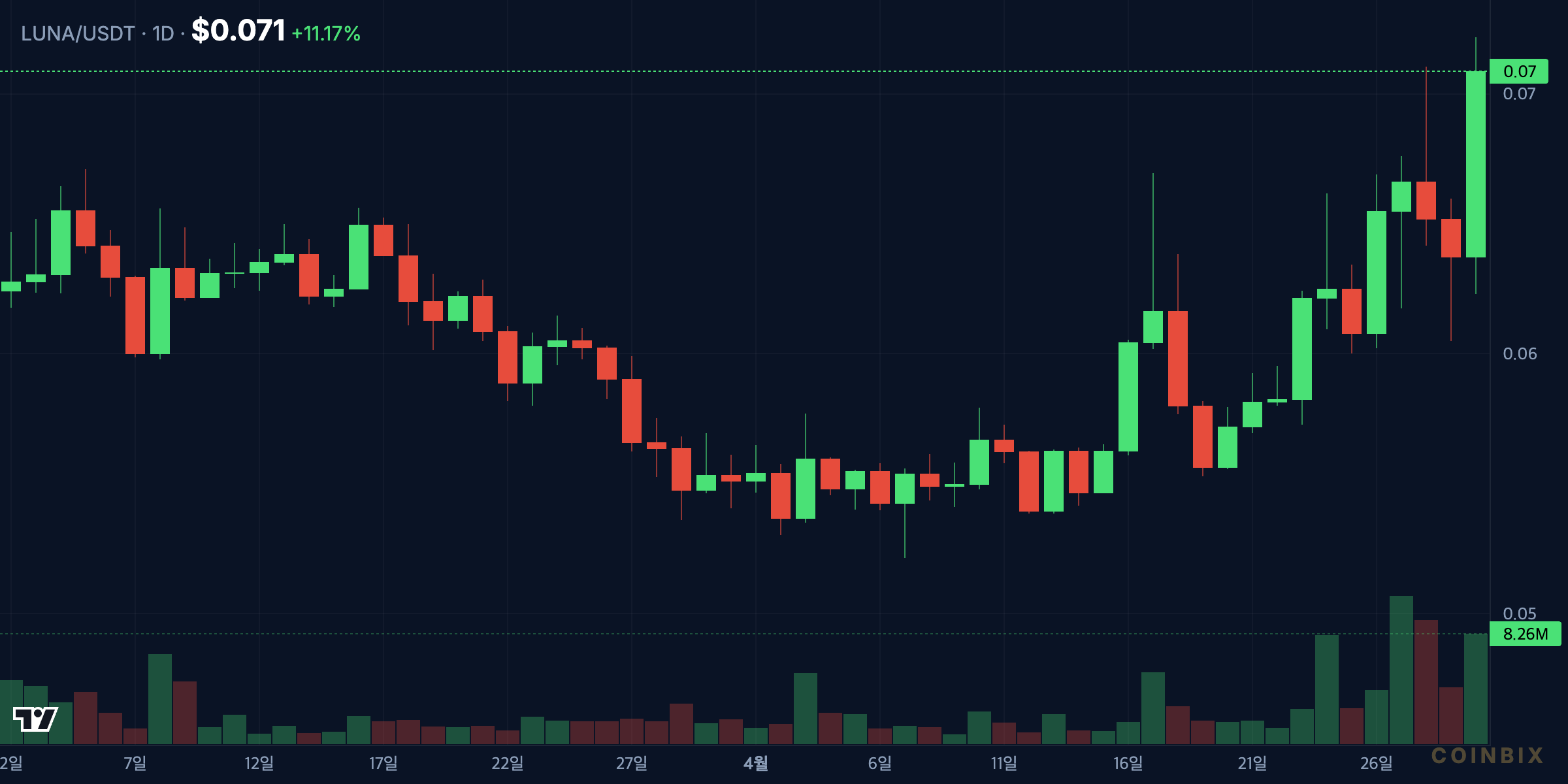
The recent price data is constructive. LUNA has gained 14.16% in 24 hours, 22.13% over 7 days, and 28.01% over 30 days. A one-month gain of more than 28% suggests that market interest has improved from its lower range, especially compared with the all-time low of $0.0458 recorded on October 10, 2025. At the current price of $0.0709, LUNA remains far below its all-time high of $18.87 from May 28, 2022, but that wide gap also gives the token a high-beta recovery profile if ecosystem confidence continues to improve.
How Terra Works
Terra works as a blockchain network built to host decentralized applications and financial tools. In practical terms, that means Terra is positioned as infrastructure: developers can build applications, users can interact with those applications, and LUNA functions as the native network token within the ecosystem.
The current Terra model is best understood through three simple ideas. First, the blockchain provides the base layer for applications. Second, the ecosystem aims to support financial tools without relying on the old stablecoin-centered structure. Third, LUNA remains the primary token tied to the network’s economic activity and governance-oriented community identity.
This architecture gives Terra a clearer story than many older distressed assets. It is not only a legacy token trying to preserve a name. It is a rebuilt network with a defined post-transition purpose: decentralized applications, financial tools, and a community-led direction. That does not remove market risk, but it gives investors and users a framework for evaluating progress.
For a global audience, the appeal is that Terra is not limited to one country, one exchange, or one narrow user group. Its listed categories on market data platform include the Terra Ecosystem as well as several portfolio categories connected to crypto investment groups, including DeFiance Capital Portfolio, Pantera Capital Portfolio, YZi Labs Portfolio, Galaxy Digital Portfolio, and major crypto venture portfolios. These categories do not guarantee future performance, but they help show where data platforms classify Terra within the wider crypto market.
LUNA Tokenomics
LUNA’s tokenomics begin with supply. market data platform lists a circulating supply of 709,984,438 LUNA and a total supply of 1,186,707,049 LUNA. At the current price of $0.0709, the token’s market capitalization is $50,370,522.
Those numbers show that Terra sits in a relatively small-cap segment of the crypto market. Small-cap tokens often move more sharply than large-cap assets because liquidity, sentiment, and volume can have a larger price impact. LUNA’s 24-hour volume of $35,182,093 is notable relative to its market capitalization, suggesting that the token is seeing active market participation during the current move.
For token holders, the circulating supply is important because it represents the amount currently available in the market. The total supply shows the broader maximum pool currently reported by market data platform. The relationship between these two figures is useful when assessing future dilution, market depth, and long-term valuation scenarios.
LUNA is also central to the Terra ecosystem’s staking and network participation model. Investors should evaluate staking through official Terra resources and supported platforms, because reward rates, validator choices, lockups, and technical requirements can change. The positive case for staking is that it can align long-term holders with network participation rather than short-term speculation alone.
From a guide perspective, the cleanest takeaway is that LUNA’s tokenomics create a recovery-style profile. The market cap is modest, the circulating supply is clearly defined by market data platform, and recent volume shows active interest. If Terra’s ecosystem continues to rebuild around applications and financial tools, LUNA’s role as the native token gives it a direct connection to that renewed activity.
Price Analysis & Outlook
LUNA currently trades at $0.0709, according to the supplied market data platform data. The token is up 14.16% over 24 hours, 22.13% over 7 days, and 28.01% over 30 days. This is a constructive short-term trend because all three timeframes are positive at the same time.
The strongest near-term signal is the 30-day gain of 28.01%. That suggests the move is not only a one-day spike, even though the 24-hour gain of 14.16% shows recent acceleration. The 7-day gain of 22.13% also supports the view that momentum has been building over the past week.
The larger perspective is equally important. LUNA’s all-time high was $18.87 on May 28, 2022, and its all-time low was $0.0458 on October 10, 2025. That range shows why LUNA remains a high-beta recovery asset rather than a mature large-cap token. The move from an $18.87 peak to a $0.0458 low created a wide reset zone, but the current price near $0.0709 also shows that LUNA has already moved above its cycle floor. For investors tracking asymmetric rebounds, that recovery from the all-time low is the key positive signal.
At a market capitalization of about $50.37 million, LUNA still sits in a small-cap segment where sentiment can shift quickly. That can create sharp drawdowns, but it also means renewed ecosystem activity, stronger exchange liquidity, or broader risk-on momentum could have an outsized effect on price. If LUNA continues to hold above its post-low base, the outlook remains constructive for gradual momentum recovery.
The most positive scenario is a slow rebuilding phase: Terra 2.0 continues to separate its current network identity from the legacy collapse, developers maintain activity, and market participants begin valuing LUNA as a smaller but cleaner smart-contract ecosystem asset. In that case, the current zone could be viewed as an early-stage accumulation range rather than simply a distressed price level.
Risks & Considerations
LUNA remains a volatile crypto asset, and its small market capitalization can amplify both upward and downward moves. A price near $0.0709 gives the token room for percentage-based rebounds, but it also means liquidity conditions matter. Thin order books, broad crypto selloffs, or sudden profit-taking can create fast price swings.
Regulatory uncertainty is another factor investors should monitor. Terra-related assets have previously appeared in regulatory discussions, including the category of securities allegations raised by the SEC. While the market has continued to trade LUNA, any renewed legal or compliance pressure could affect exchange access, liquidity, and investor confidence.
The final consideration is historical baggage. LUNA is not the same asset as LUNC, but many global investors still associate the Terra name with the Terra Classic collapse. That reputational overhang can slow adoption. The positive side is that Terra 2.0 has a clearer opportunity to rebuild trust over time if the ecosystem continues to focus on transparent development, real usage, and sustainable network activity.
For more crypto deep-dives, see our review of Everlyn (LYN) Overview & Price Outlook, and our latest market read in Three Bitcoin Charts Signal BTC Price Rebound to $82K.
FAQ
What is Terra (LUNA)?
Terra (LUNA) is the native token of Terra 2.0, a smart-contract blockchain ecosystem built after the Terra Classic network split. It is used within the Terra network and tracked separately from LUNC.
Is LUNA the same as LUNC (Terra Classic)?
No. LUNA refers to Terra 2.0, while LUNC refers to Terra Classic. The two assets are separate tokens with different market histories, communities, and network identities.
What is LUNA’s all-time high?
LUNA’s all-time high was $18.87 on May 28, 2022. Its all-time low was $0.0458 on October 10, 2025, which makes the current recovery range important for market watchers.
Where is LUNA available?
LUNA is available on supported crypto exchanges. Before using any platform, investors should check current liquidity, supported regions, fees, and custody options.
Source URLs
- market data platform Terra (LUNA)
- Terra official website
Affiliate Disclosure: This page contains affiliate links. Coinbix may earn a commission at no extra cost to you.
Disclaimer: This article is for informational purposes only and does not constitute financial advice. Cryptocurrency investments carry significant risk. Always conduct your own research before making investment decisions.