
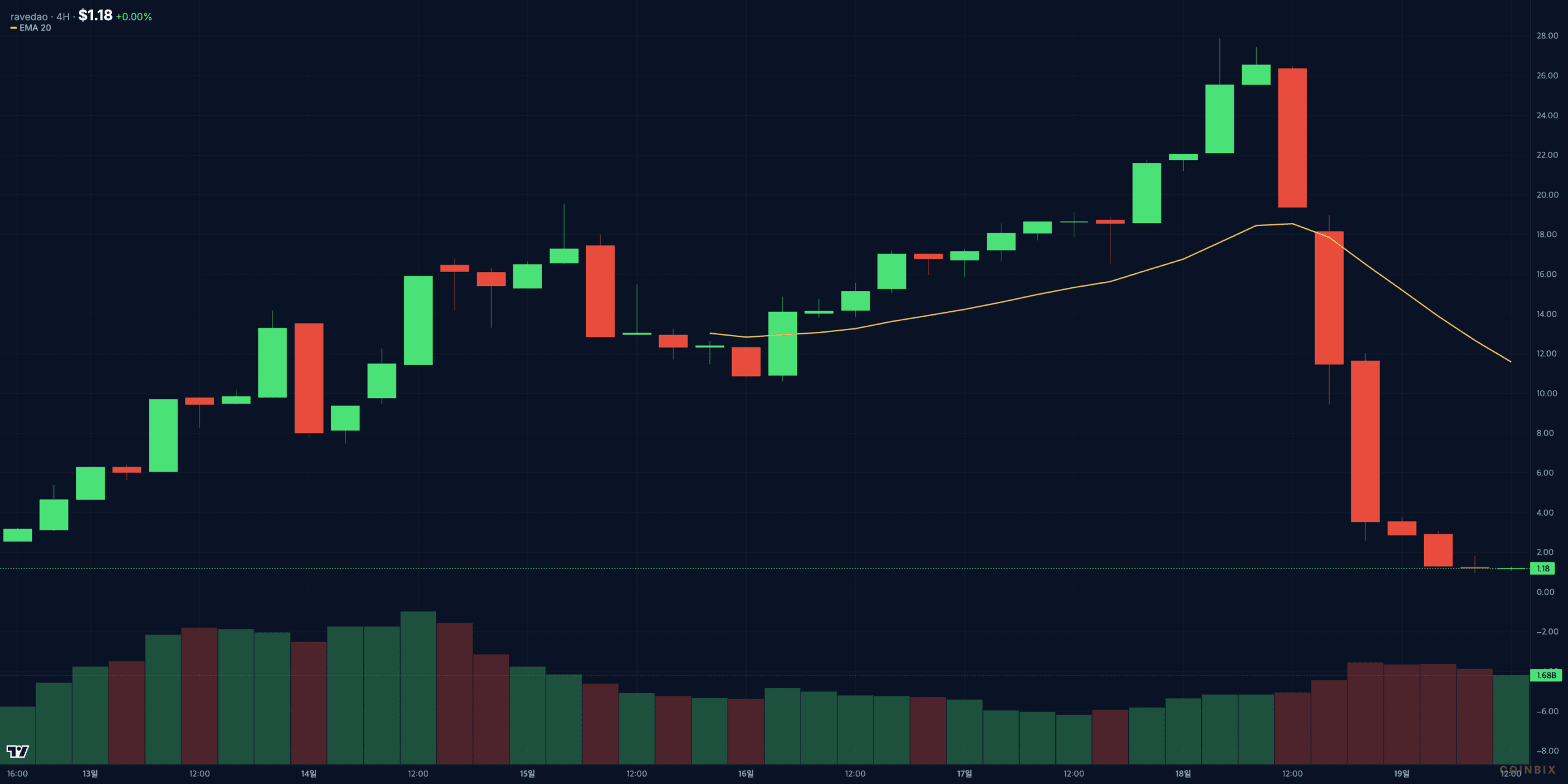
- ▼ RAVE’s rapid rise and collapse triggered manipulation concerns after the token jumped from roughly $0.25 to nearly $28, then fell sharply.
- ■ RaveDAO said it was “not engaged in, nor responsible for” the recent price action in public statements on X.
- ▼ Binance and Bitget said they were investigating trading activity, putting exchange surveillance and token distribution under fresh scrutiny.
- ■ The episode highlights how thin liquidity and concentrated holdings can amplify both upside spikes and downside damage.
Related: What is RaveDAO (RAVE)? Overview & Price Outlook and What is Pippin (PIPPIN)? Overview & Price Outlook.
RAVE’s price shock has become more than another volatile altcoin story. After the token surged from around $0.25 to nearly $28 within days and then unraveled, the move quickly turned into a broader test of market trust, exchange oversight and token transparency. In crypto, sharp rallies can attract attention fast, but when liquidity is thin and ownership appears concentrated, confidence can disappear even faster.
Why did RAVE’s rally become a market integrity story?
The controversy is not only about how far RAVE moved, but how little time it took for the move to reverse. According to reporting from The Block, the token climbed from roughly $0.25 to $28 in nine days before sliding back below $4. Cointelegraph separately reported that RAVE later traded near $1.36, representing a drop of roughly 95% over 24 hours based on CoinMarketCap data.
That kind of price arc naturally raises questions about whether the market move reflected genuine demand, a structurally weak order book, or something more coordinated. When price discovery happens in a token with limited free float, even moderate buying pressure can distort valuations. Once momentum breaks, that same setup can accelerate liquidation and panic selling.
What did RaveDAO and the exchanges say?
RaveDAO denied involvement in the move. In a public X thread cited by Cointelegraph, the project said it was “not engaged in, nor responsible for” the recent price action. That denial matters because the market debate has centered on whether the rally reflected organic speculation or insider-driven positioning.
At the same time, the issue moved beyond social media accusations because two large exchanges publicly acknowledged review activity. Binance CEO Richard Teng said the exchange was looking into the matter, while Bitget CEO Gracy Chen said Bitget had started investigating RAVE trading activity. Those responses do not prove wrongdoing, but they do show the move was serious enough to trigger formal attention from trading venues.
The combination of a public denial from the project and investigations from exchanges is what gives this story broader relevance. It shifts the discussion from simple volatility to the standards traders should expect around listings, surveillance and supply disclosure.
Why are concentrated holdings such a concern?
Part of the pressure came from claims by onchain investigator ZachXBT, who alleged that a large share of RAVE supply was controlled by wallets linked to the team. The exact attribution of those wallets remains disputed in public discussion, so that allegation should be treated as a live claim rather than a settled fact. Still, the market reaction shows how sensitive traders are to any sign that circulating supply may be far smaller than headline tokenomics suggest.
In practice, concentrated ownership can make prices look stronger than they are. A token may show a large notional market capitalization while only a limited portion trades freely. That can create a fragile setup where price can be pushed higher quickly, but cannot absorb selling once confidence weakens.
 Bybit 20% Fee Discount
Free Coinbix Premium Channel
What should traders take from the RAVE episode?
The main lesson is caution, not certainty. There is not enough verified public evidence to conclude exactly what drove every part of RAVE’s move. But there is enough to show the familiar risk pattern: low float, fast momentum, public allegations and delayed clarity around supply structure. That combination is often where retail traders face the worst execution risk.
For the broader crypto market, this is also a reminder that exchange investigations are part of the credibility layer. When venues respond quickly, they help limit reputational damage across the sector. For traders, the more practical takeaway is to treat explosive moves in thin-liquidity tokens with skepticism until token distribution, wallet concentration and real trading depth are better understood.
Bybit 20% Fee Discount
Free Coinbix Premium Channel
FAQ
Why did RAVE attract so much attention?
Because the token posted an extreme price surge in a short period and then collapsed just as quickly, turning a speculative rally into a market integrity debate.
Did exchanges confirm manipulation?
No. Binance and Bitget said they were investigating trading activity, but public investigation statements are not the same as confirmed findings.
Why do thin-liquidity tokens carry extra risk?
They can move sharply on relatively small flows, making prices easier to distort and much harder to exit once momentum reverses.
Affiliate Disclosure: This page contains affiliate links. Coinbix may earn a commission at no extra cost to you.
Disclaimer: This article is for informational purposes only and does not constitute financial advice. Cryptocurrency investments carry significant risk. Always conduct your own research before making investment decisions.