

Key Takeaways
- ▼ Bitcoin rejected near $79,500 and options markets still price downside protection at a premium, so the breakout is not confirmed.
- ▲ About $1.4 billion in leveraged shorts sit near $80,000, creating a visible pressure point if price breaks higher.
- ■ Spot demand from ETF inflows and corporate accumulation remains the key trigger; derivatives pressure alone is not enough.
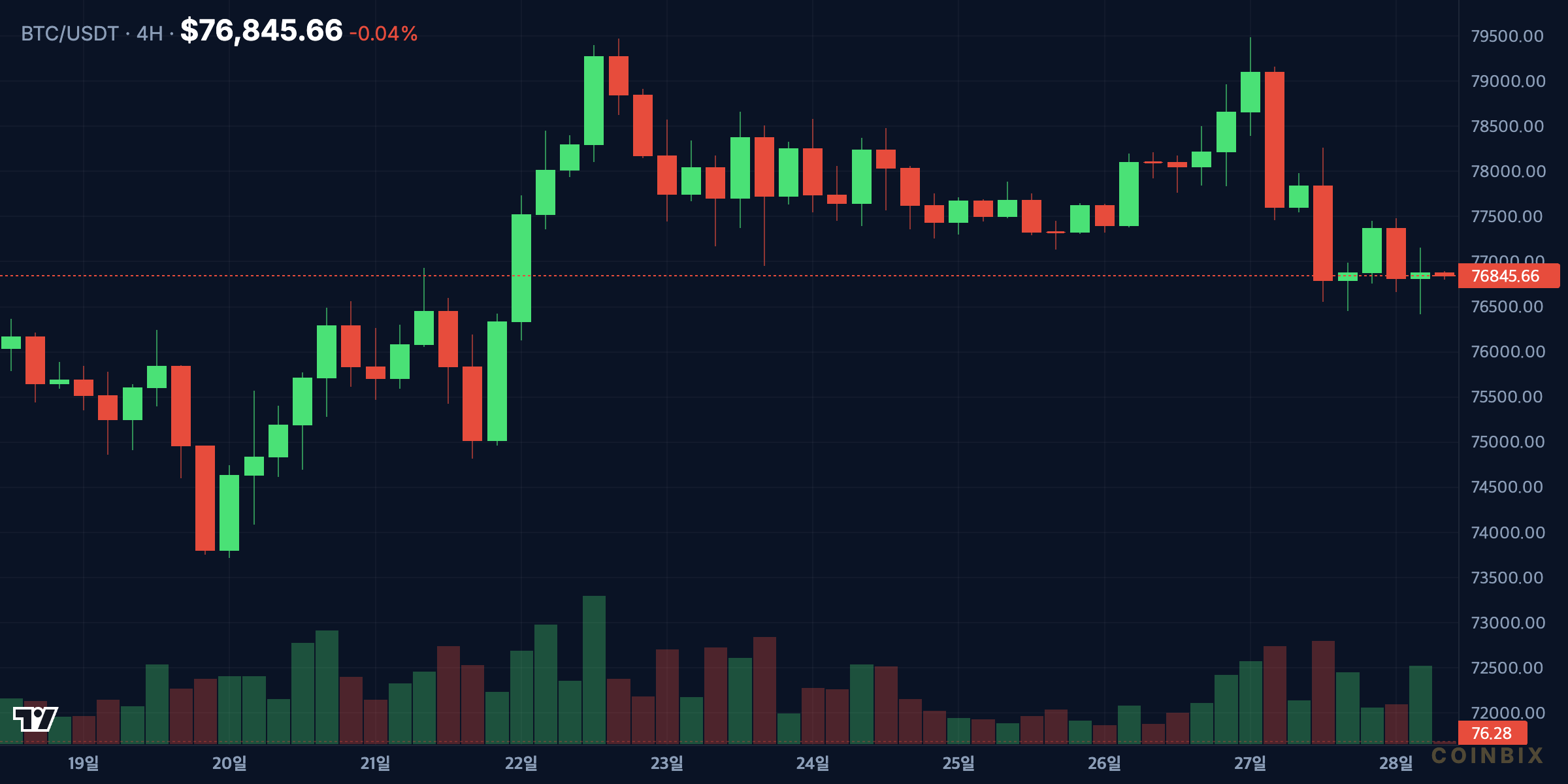
Bitcoin is trading in a narrow but important tactical zone. Price has held above $76,000 for the past week, moved well away from its $60,500 year low, and repeatedly tested resistance below $80,000. Yet the latest rejection near $79,500 shows that this is not just a momentum story. It is a market-structure test.
According to Cointelegraph, CoinGlass data shows about $1.4 billion in leveraged short positions clustered near $80,000. That does not guarantee a breakout, but it defines where forced covering could begin. If spot buyers absorb supply and push Bitcoin through that level, short sellers may have to close into rising prices.
The backdrop is mixed. Crude oil is above $100, the S&P 500 is making new highs, the five-year US Treasury yield is around 3.95%, and markets price only about a 20% probability of a rate cut by September, based on the CME FedWatch Tool. Bitcoin is therefore balancing inflation risk, liquidity expectations, and resilient risk appetite.
Why the $80,000 Level Matters Now
The $80,000 zone matters because it combines technical resistance with forced-flow risk. A normal resistance level attracts sellers because price has failed there before. A liquidation cluster adds a second mechanism: when leveraged shorts are forced out, they typically buy back the asset they sold. That can turn a clean breakout into a faster move if market depth is thin.
The rejection around $79,500 confirms that supply is active below the round-number threshold. It also shows where the pain trade begins. Bears remain comfortable while Bitcoin stays below the rejection zone. They become exposed if price moves through it with enough volume to invalidate near-term resistance.
Liquidation maps should not be treated as targets. They are conditional pressure maps. The $1.4 billion figure near $80,000 shows where forced closing could concentrate if price reaches that zone. The path still depends on spot flows, order-book depth, and whether new sellers appear.
On the four-hour chart, the key structure is simple: higher lows above $76,000 keep pressure on resistance. A decisive break below $76,000 would weaken the squeeze thesis because shorts would gain time and buyers would lose control of the recent range.
Is Negative Funding Setting a Bear Trap?
Bitcoin perpetual futures funding has been mostly negative for roughly two weeks, according to Laevitas data cited by Cointelegraph. Negative funding means short positions are generally paying long positions to keep contracts open. In practical terms, bearish leverage has been willing to lean against the recovery.
That is the bear-trap argument. Bitcoin rose from about $72,000 to the upper $70,000s while funding stayed negative. When price rises without overheated long funding, the move may be driven more by spot demand or seller exhaustion than by leveraged optimism. If that demand persists, crowded shorts can become fuel.
Still, negative funding is not automatically bullish. It can persist in weak markets when investors expect a larger reversal. The signal becomes more important when it appears alongside firm support, spot accumulation, and a nearby liquidation level. Bitcoin currently has all three, but confirmation still requires price acceptance above $80,000.

Spot Demand Is the Real Squeeze Trigger
A short squeeze needs more than vulnerable shorts. It needs the initial push that forces them to react. In the current setup, spot demand is the most credible trigger. Cointelegraph reported that Strategy added $255 million in Bitcoin between April 20 and April 26, while US-listed spot Bitcoin ETFs recorded $824 million in net inflows.
Those flows matter because they represent outright demand rather than purely leveraged futures exposure. ETF inflows can absorb available supply across sessions and create a more durable bid. If inflows continue while funding remains negative, Bitcoin can rise without the usual sign of crowded bullish leverage.
Corporate accumulation plays a different role. It is less continuous than ETF demand, but large purchases reinforce the view that long-term allocators are still using consolidation phases to add exposure. The market does not need every buyer to be price-insensitive; it only needs enough demand to absorb supply below resistance.
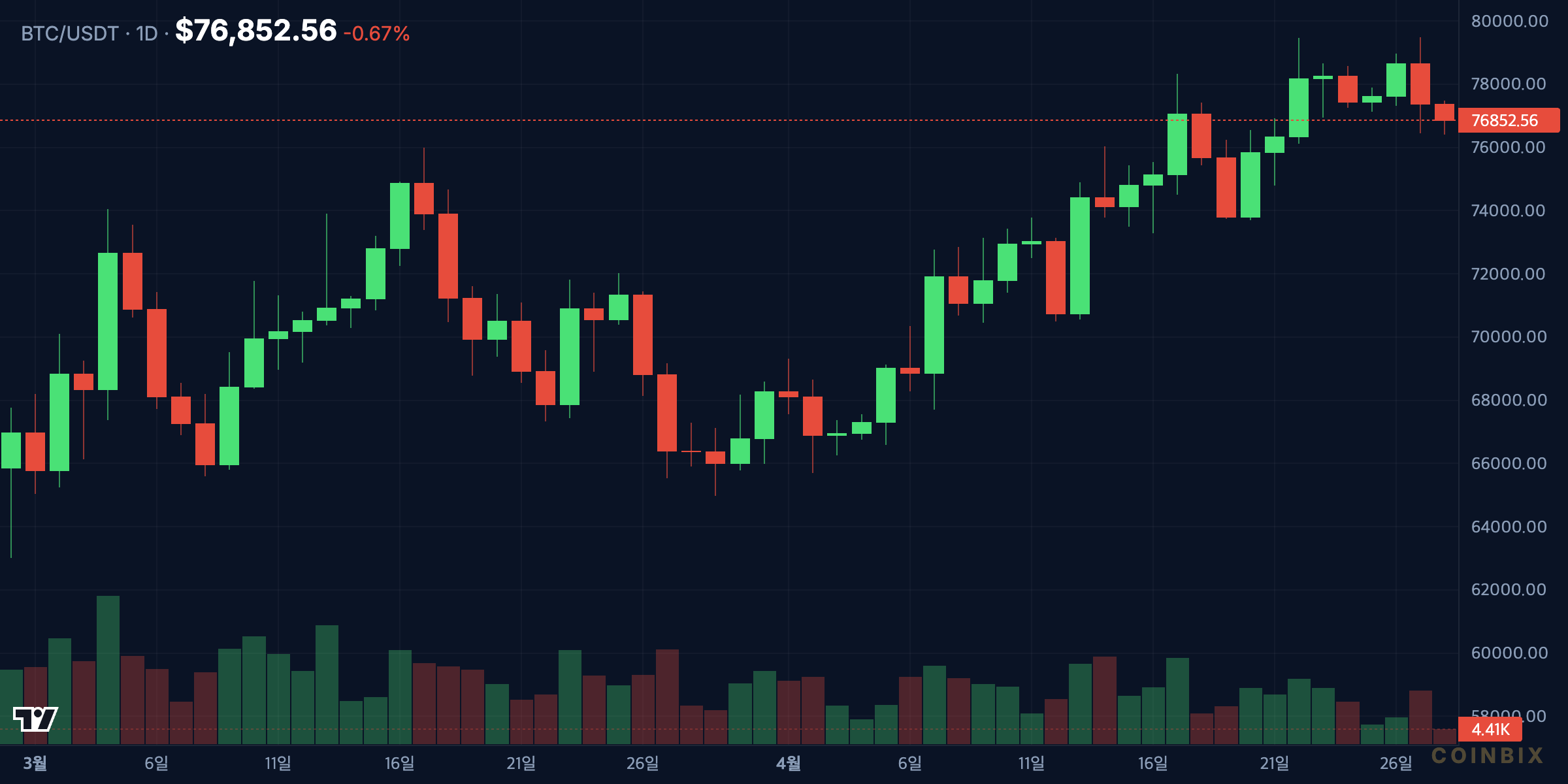
This is why the $76,000 floor matters. Holding that level for a week suggests sellers have not been able to push Bitcoin back toward the $60,500 year low. The recovery has already forced some bearish positions into losses. A push above $80,000 would increase that pressure sharply.
 Bybit 20% Fee Discount
Free Coinbix Premium Channel
What Do Options Markets Say About Downside Risk?
Options data is more cautious than the spot-flow narrative. The 30-day Bitcoin options delta skew on Deribit shows puts trading at an 11% premium to calls, according to Laevitas data cited by Cointelegraph. Investors are paying more for downside protection than upside exposure.
That premium can be read two ways. It may show that professional participants are genuinely worried about a reversal. It may also show that the market is crowded into protection after a volatile period, leaving it exposed if price breaks higher. The same skew can validate caution or create a contrarian setup.
For now, options markets are not confirming a risk-on breakout. They are showing demand for insurance. A sustained move above $80,000 would be meaningful because it would occur against cautious derivatives positioning, not after broad speculative confidence had already returned.
Macro Conditions: Inflation Hedge or Liquidity Test?
Bitcoin’s macro backdrop is unusually balanced. Oil above $100 can support the inflation-hedge narrative because higher energy prices feed into inflation expectations. At the same time, persistent inflation can limit central banks’ room to ease policy, keeping yields and funding costs under pressure.
The five-year Treasury yield near 3.95% captures that tension. It still competes with risk assets, especially if policy stays restrictive. But if inflation expectations rise faster than nominal yields, fixed-income returns look less attractive in real terms. That is the environment where Bitcoin’s scarcity narrative can regain attention.
The CME FedWatch probability of a September rate cut near 20% shows that markets are not aggressively pricing easier policy. That limits the immediate liquidity tailwind. However, it also leaves room for repricing if incoming data points toward softer growth or policy flexibility. With shorts stacked near $80,000, even a modest shift in rate expectations could matter.
Equity-market strength adds support but also risk. The S&P 500 reaching new highs suggests risk appetite remains intact. If equities reverse sharply, however, Bitcoin may trade like a high-beta asset rather than a defensive inflation hedge.
Bull Case: A Close Above $80,000 Forces Repricing
The bullish scenario begins with Bitcoin holding $76,000 and reclaiming the $79,500 rejection zone. A daily close above $80,000 would be more important than a brief wick because it would show that buyers can accept price above the liquidation cluster.
In that scenario, negative funding becomes fuel. Shorts that expected the recovery to fail would face rising losses, while forced covering could accelerate the move. Spot ETF inflows would provide the foundation, and liquidation flows would provide the speed.
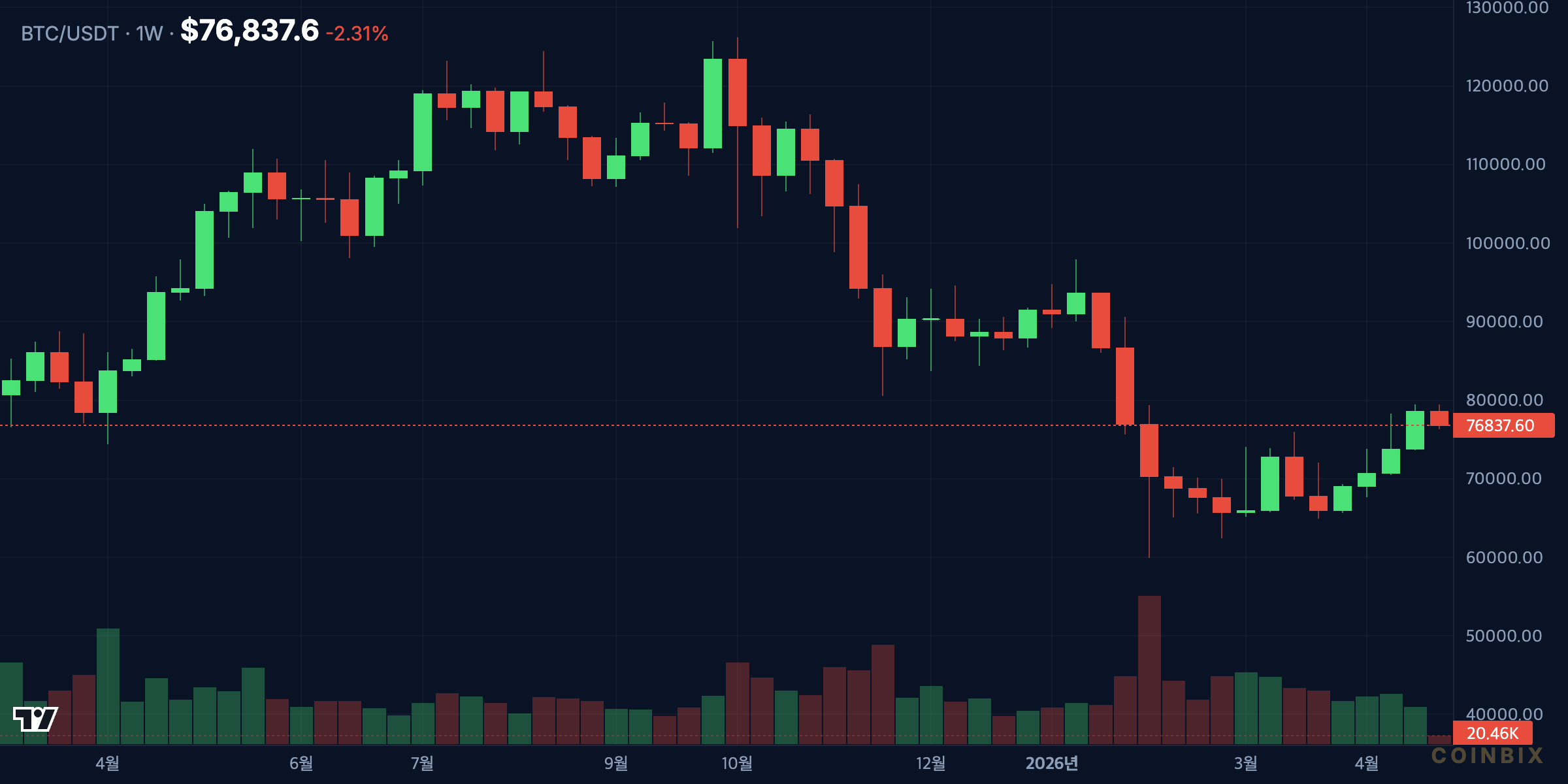
The strongest confirmation would be a daily close above $80,000 followed by a successful retest. If resistance becomes support, the structure shifts from recovery to breakout. The weekly chart then becomes important because a firm weekly close would suggest broader repricing, not only a short-lived derivatives squeeze.
Bear Case: $79,500 Rejection Becomes a Lower High
The bearish scenario is equally clear. Bitcoin fails again below $80,000, loses $76,000, and turns the recent consolidation into a lower-high structure. In that case, the liquidation cluster remains untriggered and shorts gain confidence that resistance is holding.
Options pricing supports this risk. An 11% put premium shows that downside hedging demand is still strong. If spot ETF inflows slow or reverse, the market would lose one of the main supports behind the squeeze thesis. Negative funding would then look less like a trap and more like justified caution.
Macro pressure could reinforce the bearish case. If oil-driven inflation keeps yields elevated while rate-cut expectations stay low, Bitcoin may face expensive hedging, limited liquidity relief, and resistance that remains intact. That would likely delay, rather than permanently cancel, the next breakout attempt.
What Should Investors Watch Next?
The next signal is not simply whether Bitcoin touches $80,000. It is how price behaves there. A fast spike followed by rejection would show that sellers still control the ceiling. A daily close and successful retest would show that the market has absorbed supply and put shorts under pressure.
Funding rates should be monitored closely. If funding flips sharply positive before resistance breaks, longs may be crowding too early. If funding remains neutral or mildly negative during a breakout, the squeeze setup becomes cleaner because bearish leverage is still part of the fuel.
ETF flows are the most important spot-market gauge. Continued net inflows would support the idea that demand is structural rather than speculative. Options skew is the second gauge. If the put premium narrows while price holds firm, downside fear may be fading.
Conclusion: The Squeeze Is Possible, Not Inevitable
Bitcoin’s short-squeeze setup is credible because several ingredients line up: a $1.4 billion short cluster near $80,000, mostly negative funding, steady spot accumulation, and a market that has defended $76,000 for a week. Those conditions can create a sharp upside move if resistance breaks.
But the setup is not one-sided. The rejection near $79,500, the 11% put premium in options, and the uncertain macro backdrop all argue for discipline. A squeeze needs a trigger, and the most likely trigger is sustained spot demand strong enough to push Bitcoin through $80,000 and keep it there.
The analyst takeaway is simple: $80,000 is less a price target than a stress test. If Bitcoin closes above it, bearish leverage may become forced demand. If it fails again and loses $76,000, the market may need more time before the next attempt.
Bybit 20% Fee Discount
Free Coinbix Premium Channel
FAQ
Why could Bitcoin shorts face liquidation near $80,000?
Leveraged short positions can be forced to close when price rises against them. CoinGlass data cited by Cointelegraph shows about $1.4 billion in short exposure clustered near $80,000.
Does negative funding guarantee a Bitcoin rally?
No. Negative funding shows that bearish leverage is paying to stay open, but it does not guarantee upside. It becomes more important when paired with strong spot demand and firm support.
What level weakens the short-squeeze setup?
A clean loss of $76,000 would weaken the near-term squeeze thesis because it would show that buyers are no longer defending the recent range.
Why are ETF inflows important for Bitcoin price action?
ETF inflows represent spot demand rather than purely leveraged futures activity. Continued inflows can absorb available supply and provide the pressure needed to challenge resistance.
What does the options skew reveal?
The 30-day Deribit skew shows puts trading at an 11% premium to calls, meaning downside protection is more expensive. That reflects caution, but it can also amplify a squeeze if price breaks higher.
Affiliate Disclosure: This page contains affiliate links. Coinbix may earn a commission at no extra cost to you.
Disclaimer: This article is for informational purposes only and does not constitute financial advice. Cryptocurrency investments carry significant risk. Always conduct your own research before making investment decisions.