
Key Takeaways
- ▲ Pendle lets users separate yield-bearing assets into principal and future-yield components, creating a more flexible market for DeFi income.
- ▲ PENDLE has gained 45.9% over seven days, with the token trading near $1.89 after a strong rebound from lower levels.
- ■ The protocol’s long-term appeal depends on liquidity, supported assets, integrations, and demand for on-chain yield strategies.
- ▼ Smart contract risk, yield volatility, and competition from other DeFi income products remain important considerations.
Pendle is a decentralized finance protocol built around a simple but powerful idea: future yield can be separated, priced, and exchanged. Instead of treating a yield-bearing asset as one combined position, Pendle allows users to split it into two parts: the principal value and the future yield attached to that asset. That design gives DeFi users more control over how they manage income, duration, and market exposure.
The topic is especially relevant now because PENDLE has moved sharply higher. According to the market data provided for this review, PENDLE trades near $1.89, with a market capitalization of about $0.3 billion, a 24-hour gain of 18.6%, and a seven-day gain of 45.9%. The token remains below its all-time high of about $7.50, but the recent rebound has pushed Pendle back onto many crypto watchlists.
For a global audience, the key question is not only whether the token has rallied. The deeper question is why the Pendle protocol matters. Yield is one of the core building blocks of DeFi. Stablecoin lending, liquid staking, restaking, liquidity pools, and structured vaults all create yield opportunities, but those yields usually change over time. Pendle turns that changing income stream into a tradable market.
The project’s official website describes Pendle as “the world’s largest crypto yield trading platform,” and its documentation resources are available through the Pendle official website. CoinGecko’s project description also frames Pendle as a protocol for tokenizing and trading future yield, supported by an automated market maker designed for assets with time decay.
What Is Pendle?
Pendle is a DeFi yield tokenization protocol. In practical terms, it takes a yield-bearing asset and separates it into two tradable components. The first component represents the principal. The second represents the future yield that the asset may generate before a set maturity date.
This structure is useful because different users want different things from yield. Some users want predictable returns. Some want leveraged exposure to future yield. Others want to hedge against falling rates or speculate on rising rates. Pendle makes those strategies possible by turning yield into a market with buyers, sellers, liquidity providers, and price discovery.
A useful comparison is the fixed-income market in traditional finance, where duration, rates, and future cash flows can be priced separately. Pendle brings a similar concept into DeFi, but with crypto-native assets and smart contracts. The result is a protocol that can serve both simple fixed-yield users and more advanced participants looking for active yield strategies.
How Does Pendle Work?
Pendle’s core mechanism is yield tokenization. When a supported yield-bearing asset enters the protocol, Pendle can split it into Principal Tokens and Yield Tokens. These are commonly referred to as PT and YT.
A Principal Token represents the right to redeem the underlying asset at maturity. If a user holds the PT until maturity, the PT is designed to converge toward the value of the underlying principal. This creates a fixed-yield style opportunity because the PT may trade at a discount before maturity. The user’s implied return comes from buying the principal claim below its future redemption value.
A Yield Token represents the right to receive the yield generated by the underlying asset until maturity. This makes YT attractive to users who want direct exposure to future yield. If the underlying yield rises or market demand for that yield increases, the YT can become more valuable. If yield expectations fall, the YT can weaken.
The important innovation is that these components can trade separately. A user who wants lower uncertainty may prefer PT. A user who wants higher upside from yield changes may prefer YT. A liquidity provider may supply assets to Pendle’s pools to support trading activity. This creates a modular yield market rather than a single passive holding experience.
Why Does Pendle Need a Special AMM?
Most automated market makers are built for assets that do not have a fixed maturity date. Pendle’s markets are different because yield tokens and principal tokens are time-sensitive. As maturity approaches, the behavior of these assets changes. The value of future yield naturally declines as less time remains for yield to accrue, while the principal component moves closer to redemption.
Pendle addresses this with an AMM design that supports assets with time decay. This matters because ordinary token-pair liquidity can become inefficient when one side of the market changes predictably over time. Pendle’s market structure is designed around the reality that PT and YT are not static assets.
For users, the benefit is clearer pricing. Rather than relying only on over-the-counter arrangements or isolated vault strategies, Pendle creates open markets where yield expectations can be expressed directly. That improves transparency for DeFi participants who want to understand what the market is paying for future income.
Use Cases: Fixed Yield, Yield Exposure, and Strategy Design
Pendle’s most beginner-friendly use case is fixed yield. A user can buy a Principal Token at a discount and hold it until maturity. If the underlying asset remains valid and the market functions as expected, the discount can translate into a known implied return. This can appeal to users who prefer more predictable outcomes than variable DeFi yields.
The second major use case is yield exposure. A user who believes future yield will be attractive can hold Yield Tokens. This creates a more direct way to express a view on yield than simply holding the underlying asset. If demand for that yield increases, YT positions can benefit. This is more advanced and generally more volatile, but it is central to why Pendle is considered a yield trading protocol rather than only a passive income tool.
The third use case is leveraged yield positioning. Because PT and YT separate the principal and yield sides of an asset, users can build strategies that increase sensitivity to yield changes. This can be useful for sophisticated DeFi participants, but it also increases risk. The same mechanics that create upside can amplify losses if yield expectations move against the position.
Pendle also supports hedging. A user with exposure to variable DeFi yield may use Pendle markets to reduce uncertainty or lock in a more predictable return profile. In this sense, Pendle is not only a place to seek yield; it is a toolkit for managing yield risk.
PENDLE Tokenomics and vePENDLE
PENDLE is the protocol’s native token. Its most important role is governance and value accrual through the vePENDLE mechanism. Users who lock PENDLE receive vePENDLE, which grants voting power over protocol decisions and a share of protocol revenue.
The vePENDLE model is designed to align long-term holders with protocol growth. By locking tokens, vePENDLE holders reduce circulating supply and gain influence over which yield markets and liquidity pools receive emissions. This creates a flywheel where protocol activity, revenue distribution, and governance participation reinforce each other.
From a tokenomics perspective, the key metrics to monitor are total locked supply, average lock duration, and protocol revenue. Higher lock rates suggest stronger holder conviction, while growing protocol revenue indicates that the yield trading market is gaining real traction. The current market capitalization of about $0.3 billion and a price near $1.89 place PENDLE in the mid-cap DeFi category, leaving room for growth if adoption continues.
Ecosystem and Supported Chains
Pendle has expanded beyond a single chain. The protocol is deployed on Ethereum, Arbitrum, BNB Chain, and Optimism, among others. Multi-chain deployment matters because yield opportunities differ across ecosystems, and users want access to the best available rates regardless of their preferred network.
Integrations with other DeFi protocols also strengthen Pendle’s position. Liquid staking derivatives, restaking protocols, and stablecoin issuers all create yield-bearing assets that Pendle can tokenize. As the DeFi ecosystem grows more composable, Pendle’s role as a yield primitive becomes more valuable.
The protocol’s total value locked and trading volume are important indicators of ecosystem health. Rising TVL suggests that users trust the protocol enough to deposit assets, while higher volume indicates that yield trading is becoming a meaningful activity rather than a niche experiment.
 Bybit 20% Fee Discount
Free Coinbix Premium Channel
Price Analysis: Where PENDLE Stands Now
At the time of this review, PENDLE trades at approximately $1.89. The token has gained 18.6% over the past 24 hours and 45.9% over the past seven days. The all-time high stands near $7.50, meaning the current price is roughly 75% below peak levels.
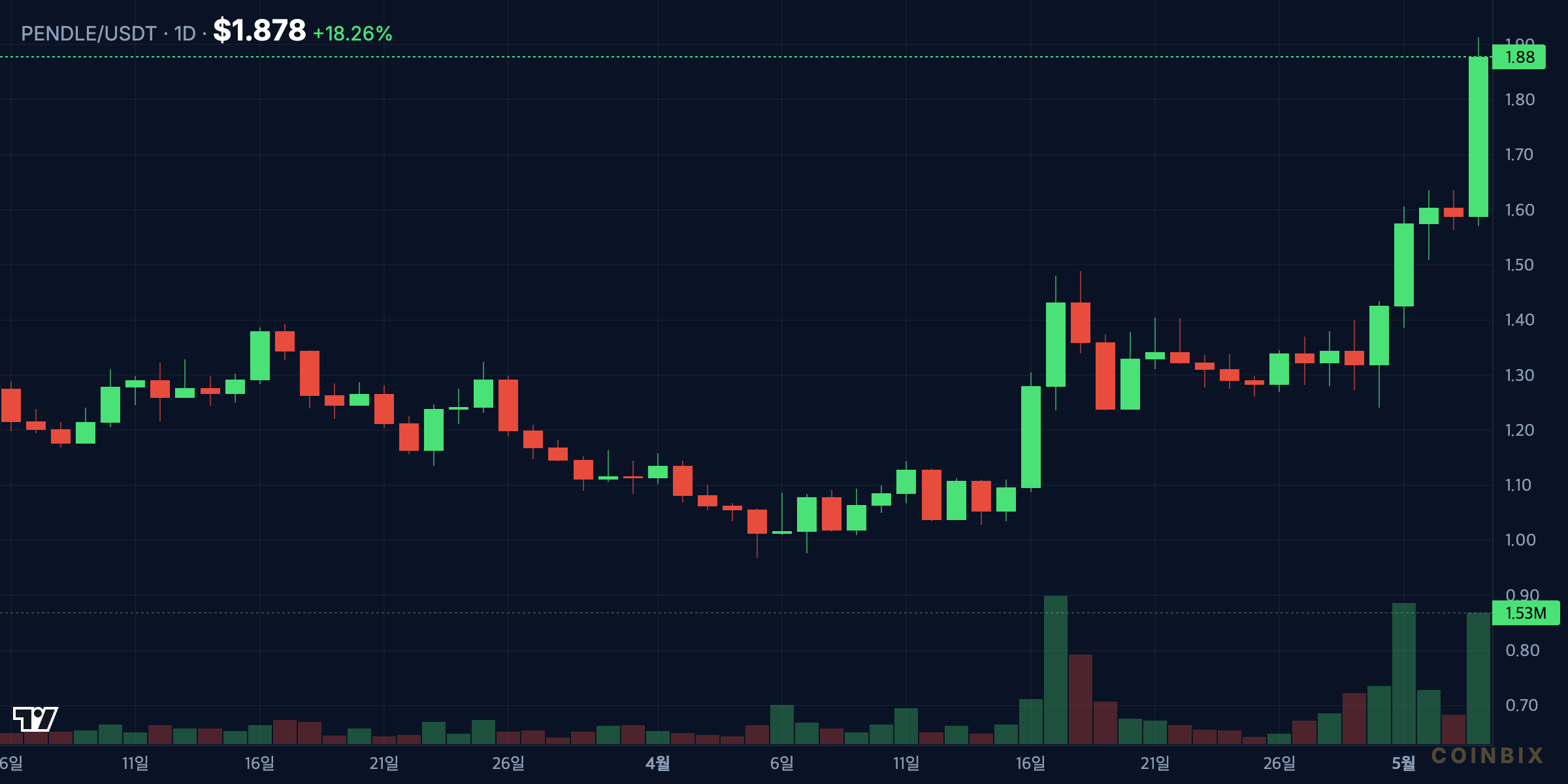
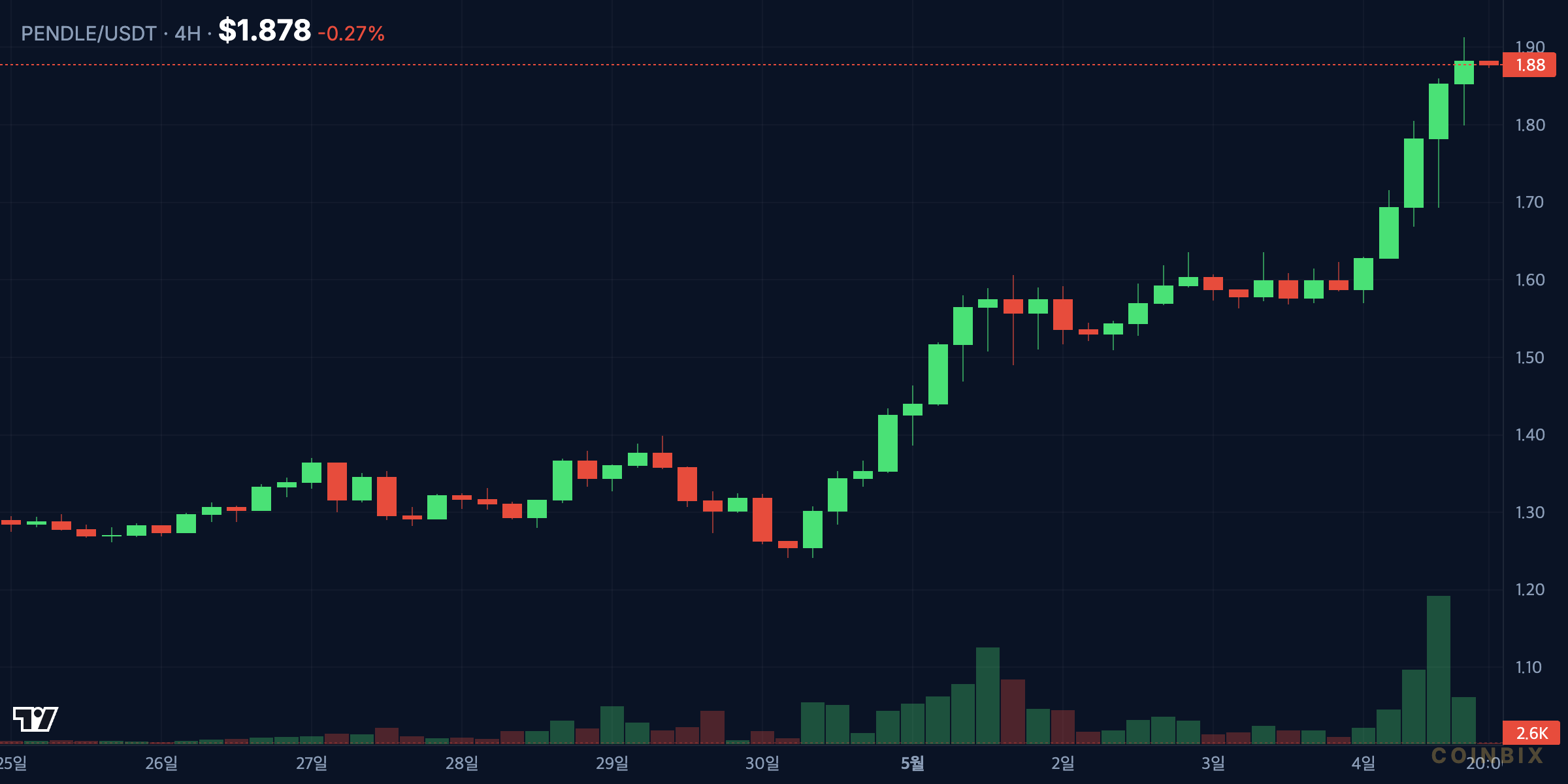
The sharp weekly gain suggests renewed interest in yield-related DeFi protocols. Several factors may be contributing: improved sentiment across crypto markets, growing awareness of yield tokenization as a category, and Pendle’s continued multi-chain expansion. The $0.3 billion market capitalization places PENDLE in a range where meaningful upside is possible if the protocol sustains adoption, though the distance from ATH also reflects how much sentiment has shifted since the peak.
For investors, the key levels to watch include the $2.00 psychological resistance and the $2.50 zone, which may act as a stronger technical barrier. On the downside, a return to $1.50 would test whether recent buyers remain committed. The high 24-hour volatility (18.6%) suggests that short-term moves could remain large in both directions.
Risks and Considerations
Smart contract risk is inherent in any DeFi protocol, and Pendle is no exception. The protocol manages complex financial instruments, which increases the potential impact of bugs or unexpected behavior. Users should consider the protocol’s audit history and track record before committing significant capital.
Yield volatility is another risk. Because Pendle’s markets are based on future yield expectations, changes in underlying DeFi rates can cause significant price swings in PT and YT. A user who buys YT expecting high yield may suffer losses if rates decline sharply.
Competition is also worth noting. Other protocols offer yield optimization, fixed-rate lending, or structured yield products. Pendle’s differentiation lies in its specialized AMM and tokenization approach, but the DeFi landscape evolves quickly. Protocols that fail to maintain liquidity and integrations risk losing relevance.
Regulatory uncertainty remains a background risk for all DeFi protocols. While Pendle operates through smart contracts and decentralized governance, the broader regulatory environment for tokenized financial instruments is still developing.
Bybit 20% Fee Discount
Free Coinbix Premium Channel
FAQ
What is Pendle used for?
Pendle allows users to tokenize and trade future DeFi yield. Users can buy principal tokens for fixed-yield exposure or yield tokens for direct exposure to future income from yield-bearing assets.
Is PENDLE a good investment?
PENDLE has gained 45.9% in the past week, but it remains about 75% below its all-time high. The protocol’s value depends on continued adoption of yield trading in DeFi. Investors should consider smart contract risk, yield volatility, and market conditions before making decisions.
What chains does Pendle support?
Pendle is deployed on Ethereum, Arbitrum, BNB Chain, and Optimism. Multi-chain support allows users to access yield opportunities across different DeFi ecosystems.
What is vePENDLE?
vePENDLE is the vote-escrowed version of PENDLE. Users lock PENDLE tokens to receive vePENDLE, which grants governance voting power and a share of protocol revenue. Longer lock durations provide greater influence and rewards.
Affiliate Disclosure: This page contains affiliate links. Coinbix may earn a commission at no extra cost to you.
Disclaimer: This article is for informational purposes only and does not constitute financial advice. Cryptocurrency investments carry significant risk. Always conduct your own research before making investment decisions.